| Writer | Nobuhiro Watsuki |
| Illustrator | Nobuhiro Watsuki |
| Published in English | 2003 |
| Publisher | Viz Media |
| Demographic | Shōnen |
| Age rating | Teen plus |
Having a Past Life as Hitokiri Battōsai
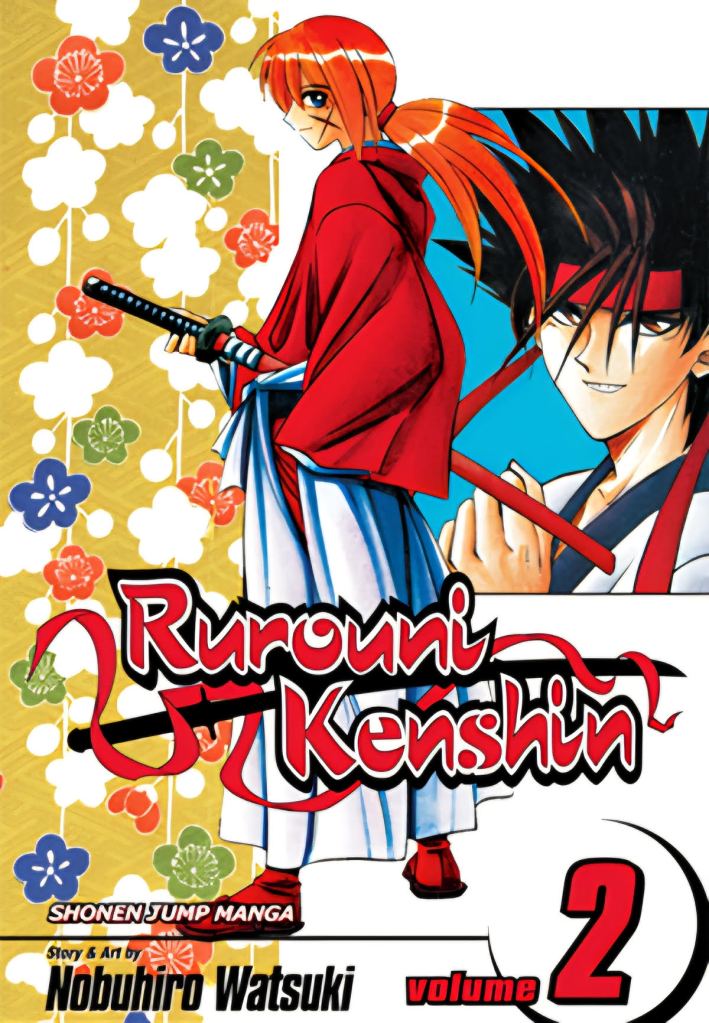
First released in 1994 in Japanese followed by an English translation in 2003, Rurouni Kenshin Vol. 2: The Two Hitokiri collects acts 7–15 of the series. The comics are written and illustrated by Nobuhiro Watsuki. The martial arts manga incorporates fantasy elements in historical fiction and is set in the Meiji restoration era.
Left unfinished in the first part, the duel between Kenshin and Sanosuke is continued in this volume. As Zanza displays extraordinary toughness, the protagonist has to apply his advanced skills. Meanwhile, the Himura brothers are present, having cruel intentions. Later on, the police is in trouble with a serial killer Kurogasa. In addition to physically defeating numerous armed men at once, he has some unnatural abilities. The protagonist is asked to confront him.
The comic book is thought-provoking thanks to the themes it includes. The characters face difficulties in being reconciled with each other after war-time hostilities. As a matter of fact, historical events are depicted with moral complexity, admitting also the flaws of those considered heroes. The manga focuses a lot on the severe consequences of being a killer, namely how a person loses their humanity through such actions. The protagonist’s past assassin identity as Battōsai is contrasted to his current peaceful personality as Kenshin. The protagonist struggles with resisting the old ways of life of a hitokiri, especially when a villain challenges his pacifist principles. More depth is given to Sanosuke with an explanation of his backstory and the reader will also see his development in the story.
In this volume, Himura Kenshin faces tricky and dishonest Kihei as well as incredibly tough Sanosuke. The protagonist does not defeat his new opponents in one hit. The resulting prolonged fights are presented in great detail with a focus on the technical aspect. The author uses the dialogue to explain Kenshin’s fighting style Hiten Mitsurugi-Ryū. However, the comics are not only concerned with physical opposition, instead a battle of wills starts to play a key role when Kurogasa is introduced. Kenshin finds a worthy challenge in confronting this ruthless villain who utilises both an uncanny fighting style Shin No Ippō and emotional manipulation against the protagonist.
The manga has an overall dark mood. The author provides suspense and danger throughuot the comic book and, moreover, there are a few brutal flashbacks to the war. Nevertheless, in lighter moments the peculiar characters and slapstick humour prevent it from becoming depressive. The illustrations tend to be exaggerated. Kurogasa’s hypnotising effect on his opponents is interestingly visualised with negatives. Kenshin’s battle expression can be clearly distinguished from what his face normally looks like. The scenes are accompanied by detailed drawings of various locations.
All in all, Rurouni Kenshin Vol. 2 emphasises the pivotal role of the hardships and difficult choices in the lives of characters. Tense plot and a great villain make it a thrilling book.
Characters
Themes
Plot
Artwork
Content advisory
Erotic content: SLIGHT
A man falling so his underwear is seen below the clothes. A statue of a naked woman (not very detailed).
Violence: CONSIDERABLE
A head of a decapitated man seen in a flashback to war.
Zanza places his zanbato above a character’s hand, in the next panels the weapon hits the ground and the character is screaming.
A character’s face bleeding.
A character loses conciousness as a result of an intense fight. Characters get cut with a sword. A character’s arm is broken.
Serial killer kills people with a sword.
In one panel depicting the war time, a character holds in his hand a head of a beheaded man.
A characters commits suicide pressing a sword through his body.
Profanity: NONE
Scary content: MODERATE
Characters often face danger from strong and violent villains. Kurogasa’s paralysing ability makes men helpless against him. Flashbacks to war are dark and violent. Some readers may find Kurogasa creepy, partly because of his appearance and also he incites the protagonist to kill. There is an explicit scene of suicide, unpleasant.
Alcohol. drugs, and smoking: MODERATE
Villain smoking. Characters say someone died due to an overdose of opium. A character has opium hidden in her clothes.
 Mangas in Depth
Leave a comment