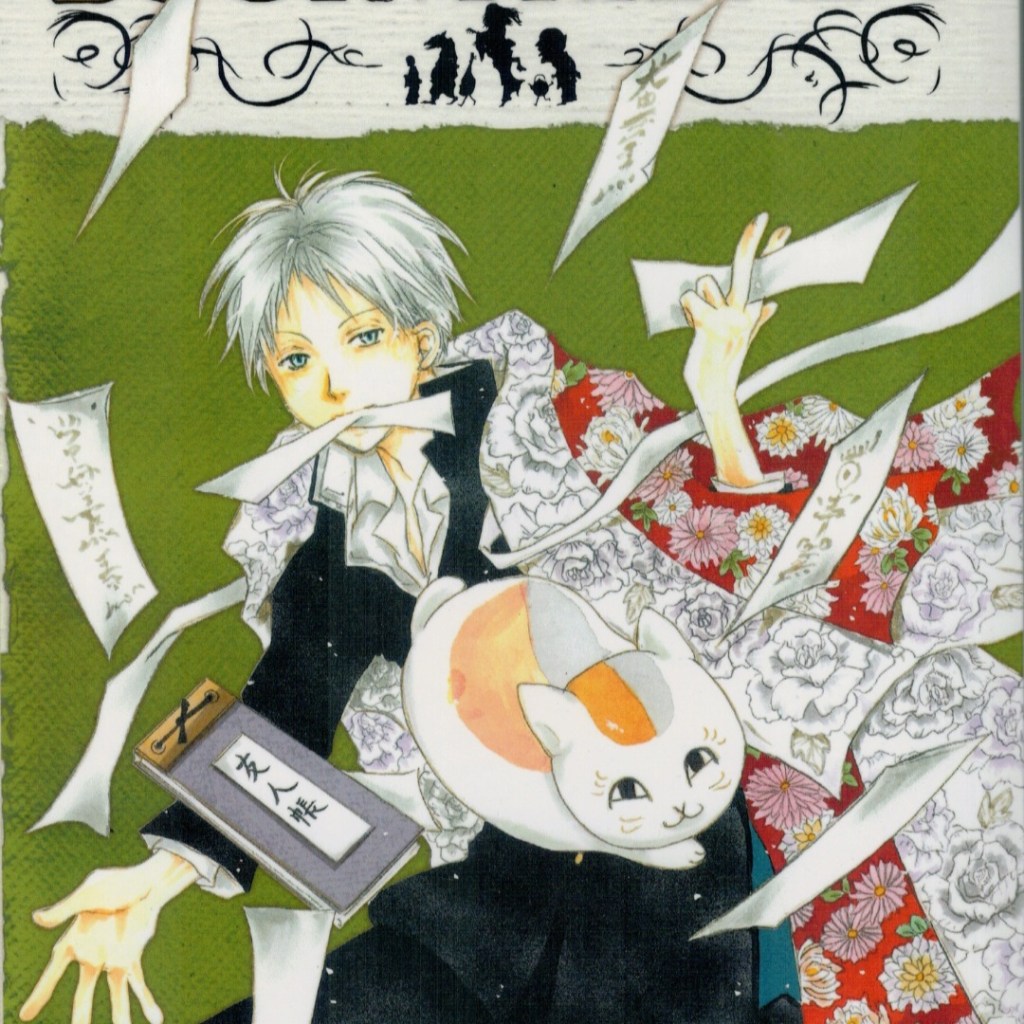

| Writer | Yuki Midorikawa |
| Illustrator | Yuki Midorikawa |
| Published in English | 2010 |
| Publisher | Viz Media |
| Demographic | Shōjo |
| Age rating | Teen |
Beautiful Character-Driven Fantasy
Starting the manga series of the same name, Natsume’s Book of Friends Vol. 1 was first printed in the tankōbon format in 2005 and the English translation followed in 2010. It collects four chapters originally published in LaLa DX magazine. The comics are written and illustrated by Yuki Midorikawa who is also known (at least in Japan) for creating Hotarubi no Mori e (Into the Forest of Fireflies). Natsume’s Book of Friends is a shōjo manga in mystery and supernatural fantasy genre.
The central character Takashi Natsume is a boy who can see yokai – creatures normally invisible to people. In the first chapter he meets Nyanko Sensei who will accompany him in all the subsequent comics. The protagonist also learns about potent Book of Friends holding the names of numerous yokai. Thus the stage is set for what is to come. While there is an overarching storyline with a few important characters being present throughout the book, every chapter works as a stand-alone short tale, offering a plot distinct from others.
An orphan whose special abilities make him an outcast may seem like a too familiar trope character in YA fantasy, nevertheless, the inner life and interactions of the protagonist will engage the reader thanks to the emotional depth the author has put into her writing. Takashi’s kindness is undermined by his hardships in social life. In the course of the stories he slightly evolves, trying to befriend others. In addition, he has always avoided and been afraid of yokai, whereas during the events of this Book he grows attached to some of them. I contrast, his grandmother Reiko, also not fitting in because of the ‘vision’, was hostile towards yokai, which implies that the characters can react to the same situations in opposite ways. Natsume and Nyanko Sensei balance each other: the protagonist is naïve while his yokai companion has more suspicion about others’ intentions and also shows more selfish traits.
In several moments the graphic novel concerns loneliness. For whatever reason it occurs, the sensitively written scenes make the reader sympathise with the characters. The comics also emphasise family and connections. For instance, the Book of Friends has a special meaning for Takashi as heritage from his grandmother. The author has depicted character interactions in a delicate way. When Natsume befriends Tsuyukami, the relationships and thoughts of the latter are detailed. This leads to a deeply touching scene. What is more, Takashi meets Swallow whose ephemeral visit to (human) society is the most beautiful part of the book.
There is some mystery in the comics, especially when Takashi cannot initially understand the supernatural events going on in his life. The complicated quest for releasing Tsuyukami’s name from the possession of the Book makes the second comics exciting whereas a help request from yokai starts the twisted plot of the third chapter. Due to its special properties, the Book of Friends attracts yokai which means that Takashi has to regularly confront them. The graphic novel restricts, though, the number of pages devoted to action in order to focus more on the meaningful content.
The author has taken a lot of inspiration from Japanese mythology, creating a fictional world where the supernatural harmonically coexists with the natural and where the fantastical creatures are as relatable as human beings. Nature has an integral role in the comics. Its importance can be seen in the character called Swallow who can sense when the rain is coming as well as in the overall attention given to the surrounding environment. The author focuses a lot on the inner life of the characters, writing internal monologues and flashbacks, while otherwise conveying it implicitly.
The manga has elegant artwork, characterised by fine lines and clear depiction. Although there are also panels filled with tiny details, mostly the elements of a picture are placed in a simple arrangement. The drawings consist largely of negative space an sometimes there are a few panels on a black background. Through this approach, the scenes which are emotional or play an important role in the plot, become more focused and impactful.
All in all, Natsume’s Book of Friends Vol. 1 succeeds in providing a meaningful story thanks to the moving interactions between characters, and attention to their feelings. The mysterious plot will catch the interest of the reader while the style of writing and artwork perfectly work together. This is a great read for anyone looking for a shōjo manga focusing on platonic relationships instead of romance.
Characters
Themes
Plot
Artwork
Content advisory
Erotic content: NONE
When attacked by yokai, Takashi tells them to stop touching him ‘there’. Nyanko Sensei says he’s being sexually harassed.
Violence: SLIGHT
The protagonist is regularly attacked by yokai who lay him down, push against a tree, grab his head. Brief fighting. More peril and threats than actual violence.
Profanity: NONE
Scary content: MODERATE
In chapter 2, Takashi confronts a ghost-looking yokai who is slightly frightening. In chapter 3, a reflection in a mirror shows a considerably creepy creature.
Alcohol, drugs, and smoking: SLIGHT
A yokai character and Nyanko-Sensei drink an alcoholic beverage. Very brief.
 Mangas in Depth
Leave a comment